How AI agents move from demos to dependable execution.
We focus on tool use, browser execution, computer control, memory design and the approval layers that make automation trustworthy.
Lead Coverage
Open feature
Agentic vision is turning the interface into a navigable control layer
The important shift is not that models can see screens. It is that they are learning to interpret interface state and choose the next action.

OpenAI’s enterprise push is converging on company-wide agents and a unified AI work surface
OpenAI’s latest enterprise note is more revealing than a revenue update. It outlines a fairly explicit product direction: company-wide agents coordinated by a shared intelligence layer, plus a unified AI work surface that brings ChatGPT, Codex, browsing, and action-taking into one daily environment.

Why enterprises suddenly want an agent stack, not just an LLM integration
The move from “model access” to “agent infrastructure” reflects a maturing understanding of what deployment actually requires.
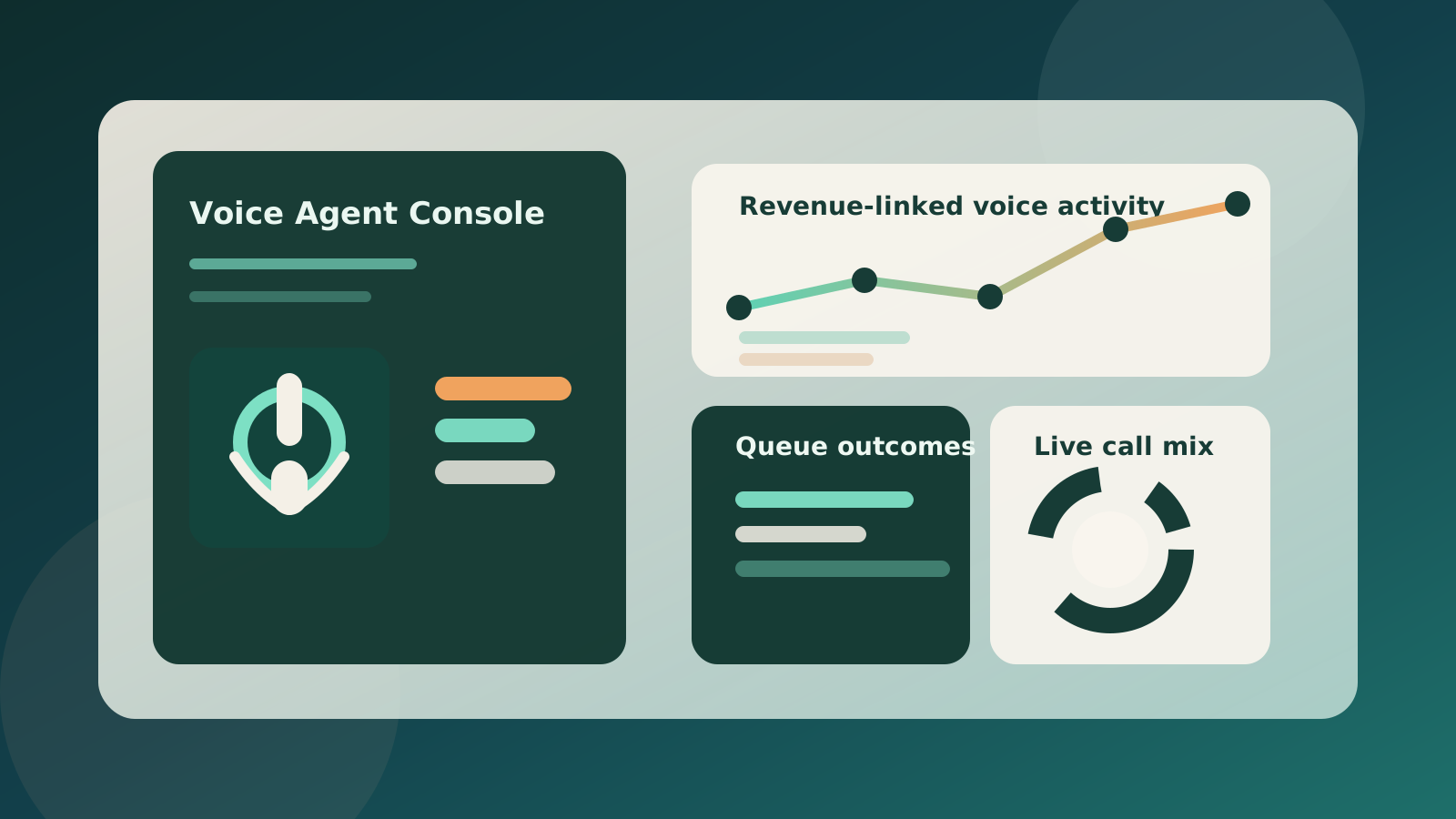
Voice agents are becoming a revenue discussion, not just a demo discussion
Speech interfaces start to matter commercially when they reduce wait time, improve throughput and handle routine intent with acceptable reliability.

Browser agents need a compliance layer before they can scale inside enterprises
Browser automation looks increasingly powerful, but the next adoption bottleneck is not capability. It is whether those systems can prove who acted, what changed and where human review still belongs.